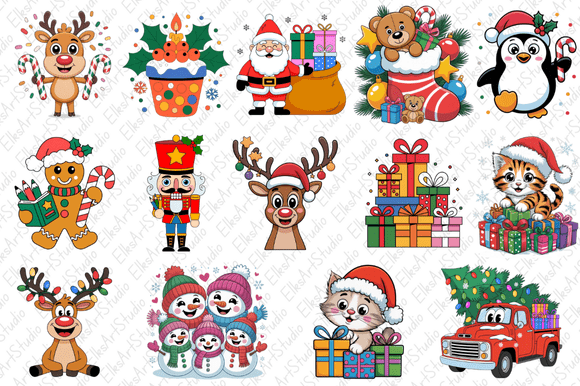
Reviewing the Christmas Characters Clipart Bundle
As a designer who has spent countless hours digitizing and stitching out holiday motifs, I approach any new Christmas Characters Clipart Bundle with a mix of excitement and skepticism. We have all seen those cute digital packs that look flawless on a screen but turn into a tangled mess of thread breaks and puckering once they hit the fabric. When I pulled up this collection of Illustrations, my first instinct was not just to admire the aesthetics, but to mentally translate them into stitch paths. Could these characters actually survive the rigors of a commercial machine embroidery design workflow?
The initial visual impression is charmingly nostalgic. The lines are clean, and the character expressions are distinct, which is crucial for maintaining clarity in an embroidery project. However, charm alone does not make a viable product for a craft business. I needed to know if these assets would hold up when translated from pixels to threads. I imagined using them for a high-volume holiday rush, perhaps creating a line of personalized gifts for local boutiques or expanding my own Etsy seller catalog with fresh, festive items.
From Screen to Stitch: A Real-World Test
To truly evaluate the potential of this bundle, I visualized a specific scenario: a custom order for a set of matching family sweatshirts. This is a common request in December, and clients expect crisp, professional results. I selected one of the simpler character designs from the bundle to test mentally against the constraints of a standard 5x7 hoop size.
The key challenge with character-based Illustrations is often the level of detail. In this bundle, the shapes are relatively bold, which is a positive sign for embroidery. Fine details often get lost in the texture of terry cloth or fleece, common choices for sweatshirt embroidery. If I were stitching this onto a thick cotton blend, I would likely rely on a combination of satin stitch for the outlines and facial features, and a lighter fill stitch for larger colored areas. The design’s simplicity suggests it would not require excessive stitch density, reducing the risk of fabric distortion—a critical factor for wearable custom apparel.
I also considered how this would work as an applique design. Many of the characters have solid shapes that could easily be cut from felt or flannel and then stitched down. This approach not only saves time but also adds a lovely textured dimension to the finished product. For a tote bag design, applique would be particularly effective, providing durability and a pop of color without the heaviness of dense stitching.
Versatility Across Product Lines
One of the strongest aspects of this bundle is its adaptability. While my initial thought was apparel, the clean lines make these characters suitable for a variety of small shop product offerings. Imagine these stitched onto canvas embroidered patch blanks, which can then be ironed onto jackets or hats. Patches are a low-risk, high-margin item for any creative entrepreneur.
For those focusing on home decor, these designs would translate well to kitchen towels or pillow covers. However, caution is needed here. On thinner fabrics like linen tea towels, even a moderate stitch count can cause puckering. Using the right stabilizer is non-negotiable. I would recommend a cut-away stabilizer for items that will be washed frequently, ensuring the holiday embroidery remains intact and flat over time.
The bundle also holds promise for baby embroidery projects. Soft onesies or burp cloths featuring these gentle characters could be huge sellers. But again, the tactile experience matters. Parents want softness, so I would avoid heavy fill stitches on sensitive skin areas. Instead, I might use a running stitch for delicate details or keep the design small and minimal to maintain comfort.
Navigating Technical Challenges
While the designs are appealing, there are areas where a designer must exercise caution. Curved surfaces, such as caps or beanies, present a unique challenge. The geometry of a character’s face can distort if not properly centered and stabilized. If you plan to use these for headwear, I strongly advise testing on scrap fabric first. Check how the thread colors interact with the fabric texture. Dark fabrics can swallow up dark thread colors, making the design invisible from a distance. Always run a contrast check, perhaps viewing your digital embroidery file preview in black and white to ensure the shapes remain distinct.
Another consideration is the scale. What looks perfect at 4 inches might become illegible at 2 inches. Tiny lettering or intricate facial features can merge into a blob if the needle size and thread weight are not appropriate. For smaller hoop sizes, simplify the design by removing the smallest elements. This preserves the integrity of the character while ensuring a cleaner stitch-out.
Commercial Viability and Brand Consistency
For commercial embroidery professionals, consistency is key. Using a cohesive bundle like this helps build brand recognition. Customers begin to associate your specific style of holiday cheer with your shop. Whether you are creating printable mockup images for your online store or producing physical inventory for craft fairs, having a unified aesthetic strengthens your market presence.
However, before listing any handmade product featuring these designs, you must verify the licensing terms. Not all clipart bundles allow for commercial use of the stitched output. Ensure you have the right to sell the finished product or if there are restrictions on quantity. This due diligence protects your business and builds trust with your customers.
Final Designer Notes
If you are considering adding this Christmas Characters Clipart Bundle to your library, here is my practical advice:
- Test on Scrap Fabric: Never stitch directly on your final garment. Use similar material to check tension and registration.
- Check Thread Contrast: Ensure your chosen thread colors stand out against the fabric, especially for distant viewing.
- Review Stitch Density: If the digitized version feels too heavy, consider editing the file to reduce density, especially for stretchy fabrics.
- Confirm Hoop Size: Make sure the design fits comfortably within your machine’s maximum hoop area with room for stabilization.
- Inspect Small Details: Zoom in on the digital file. Are there tiny islands of color that might not stitch out cleanly? Simplify if necessary.
- Use Proper Stabilizer: Match your stabilizer to your fabric type—cut-away for knits, tear-away for wovens.
In conclusion, this bundle offers a solid foundation for festive design assets. With careful attention to technical execution and material selection, these characters can elevate your holiday embroidery offerings, bringing joy to customers and reliability to your production process.