Festive Christmas Cats Wishes Clipart: A Designer’s Review
As a designer who spends more time staring at stitch maps than actual fabric, I have learned to be skeptical of cute holiday graphics. The gap between a digital illustration and a stitched reality is often wider than clients expect. When I first pulled up Festive Christmas Cats Wishes Clipart, my initial reaction was cautious optimism. The theme is undeniably popular—cats combined with Christmas imagery are perennial bestsellers on Etsy and in boutique shops—but the execution determines whether a design becomes a cherished heirloom or a puckered mess.
This review comes from the perspective of someone who has to make this design work on real garments for real customers. I am not just looking at the aesthetic; I am evaluating how Festive Christmas Cats Wishes Clipart behaves under the needle, how it translates across different fabrics, and whether it holds up as a viable asset for a craft business.
First Impressions and Visual Personality
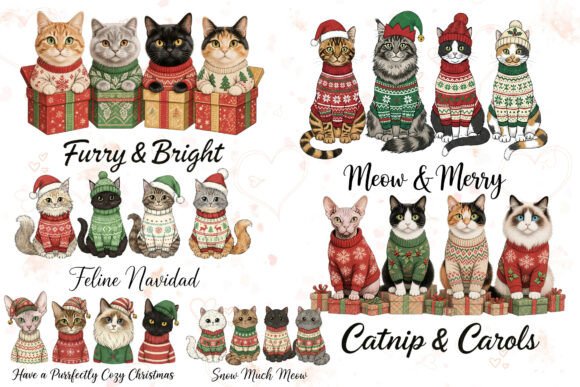
The mood of this clipart set is warm, whimsical, and distinctly seasonal. Unlike some holiday designs that rely on overly complex shading or tiny, intricate details that vanish when stitched, these illustrations tend to favor bold shapes and clear silhouettes. This is crucial for embroidery. When you are working with thread rather than ink, clarity is king. The visual personality here leans toward playful charm, making it an excellent candidate for products that aim to evoke nostalgia and joy.
For an embroidery designer, the layout matters immensely. Are the elements clustered too tightly? Is there enough negative space? From what I can observe, the composition allows for breathing room. This suggests that the design will not require excessive jump stitches or dense fill areas that could stiffen the fabric. It feels like a design that respects the limitations of the medium while maximizing its decorative potential.
Real-World Application: The Tote Bag Test
To truly evaluate Festive Christmas Cats Wishes Clipart, I mentally placed it on a standard canvas tote bag. This is a staple item for any small shop product line during the holidays. Canvas is forgiving, but it has a distinct texture. A design with too much fine detail would get lost in the weave. However, the bold lines typical of this clipart style should translate well into a combination of satin stitch for outlines and fill stitch for larger colored areas.
Imagine a customer walking into a holiday market. They see a tote with a crisp, embroidered cat wearing a Santa hat. The thread colors pop against the natural beige or deep red fabric. The design does not look muddy. It looks intentional. This is the difference between a generic print and a high-value handmade product. The tactile nature of embroidery adds weight and perceived quality to the item, justifying a higher price point for the seller.
Versatility Across Product Lines
Beyond tote bags, this design has strong potential in several other categories:
- Sweatshirt Embroidery: Placed on the left chest or as a larger back piece, the whimsical theme fits perfectly with cozy winter wear. The softness of fleece pairs well with the playful subject matter.
- Baby Embroidery: For onesies or burp cloths, the cute factor is undeniable. However, one must be mindful of stitch density to ensure the garment remains soft against sensitive skin.
- Embroidered Patch: These illustrations often work beautifully as standalone patches. This allows for mass production of the design on stable backing, which can then be ironed or sewn onto various items, reducing setup time for custom orders.
- Kitchen Towels and Aprons: Holiday hosting is huge, and personalized kitchen textiles are a growing niche. The durability of the stitch pattern needs to withstand washing, so proper stabilizer use is non-negotiable here.
Technical Considerations and Potential Pitfalls
While the aesthetic is strong, practical application requires vigilance. Not every surface is friendly to every design. Here is where I would exercise caution with Festive Christmas Cats Wishes Clipart.
Fabric Texture and Stretch: If you are applying this to a stretchy knit or a thin, slippery fabric, the design may distort. The weight of the thread can pull lightweight fabrics out of shape. In such cases, using a cut-away stabilizer is essential to maintain the integrity of the finished product. For textured fabrics like terry cloth or heavy wool, ensure that the stitch length is adjusted so the threads do not sink into the pile.
Small Hoop Sizes: If you are working with a 4x4 inch hoop, you may need to isolate specific elements of the clipart. Trying to cram a complex scene into a small space can lead to dense stitch areas that cause needle breaks or thread bunching. Always check the scale before digitizing or purchasing the machine embroidery design.
Dark Fabrics: Thread color contrast is vital. If stitching on black or navy, ensure your digitized file includes an underlay stitch that matches the top thread or uses a white underlay to prevent the fabric color from showing through gaps in the fill stitch. This is a common oversight that ruins the professionalism of a custom apparel piece.
Enhancing Brand Value and Customer Trust
For Etsy sellers and creative entrepreneurs, consistency is key. Using a cohesive set of illustrations like Festive Christmas Cats Wishes Clipart helps build brand recognition. When customers see a consistent style across your tote bags, sweatshirts, and printable mockup previews, they perceive a higher level of professionalism. It signals that you are not just throwing random graphics together, but curating a thoughtful collection.
Moreover, the emotional connection people have with pets and holidays drives engagement. A well-executed embroidery project featuring these cats is highly shareable on social media. It encourages user-generated content, which is invaluable for small business marketing. The "giftability" factor is high; people are more likely to buy a personalized gift that features a charming, unique design rather than a generic store-bought item.
Practical Notes for the Embroidery Designer
Before you commit to running this design on a client’s expensive garment, follow these steps:
- Test on Scrap Fabric: Never skip this step. Stitch the design on the same type of fabric you intend to use for the final product. Check for puckering, thread breaks, and color accuracy.
- Review Stitch Density: High density can make fabric stiff and prone to tearing. Ensure the digital embroidery file has been optimized for the specific material.
- Check Licensing: If you plan to sell finished items or use the clipart in digital products, confirm the license terms. Commercial embroidery rights vary, and protecting your business from infringement is critical.
- Mockup in Black and White: Remove color from your preview to check the contrast and shape definition. If the design loses its form without color, it may rely too heavily on shading rather than structure, which is risky for embroidery.
- Stabilizer Selection: Match your stabilizer to your fabric. Tear-away for stable woven fabrics, cut-away for knits, and water-soluble for delicate or textured materials where residue is a concern.
In conclusion, Festive Christmas Cats Wishes Clipart offers a strong foundation for holiday-themed embroidery projects. Its success lies not just in the cuteness of the cats, but in how well the design is adapted to the physical constraints of thread and fabric. With careful attention to technical details and a strategic approach to product selection, this design can be a profitable and delightful addition to any craft business portfolio.