Reviewing Christmas Angels for Holiday Embroidery
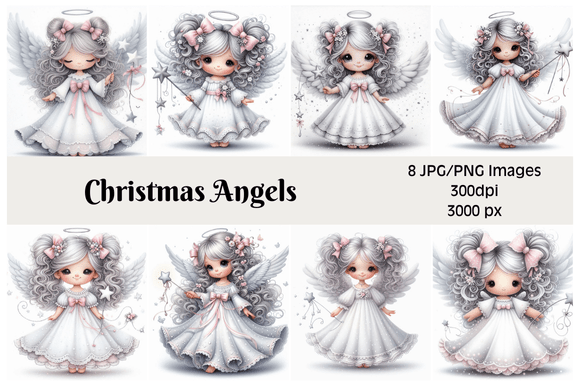
As we approach the busiest season for craft businesses, the pressure to find designs that balance aesthetic appeal with technical reliability intensifies. I recently spent time evaluating Christmas Angels, a piece from the Illustrations category, to determine its viability for real-world production. My goal was not just to look at the artwork, but to visualize how it translates into thread on various substrates. For embroidery designers and Etsy sellers, the difference between a pretty image and a profitable machine embroidery design often lies in stitch placement and density management.
First Impressions and Visual Personality
The initial impact of Christmas Angels is one of gentle nostalgia. The layout avoids the chaotic clutter often seen in holiday graphics, opting instead for a cleaner silhouette that reads well from a distance. This is crucial for items like tote bags or sweatshirts, where the design needs to be identifiable without the viewer standing inches away. The mood is serene rather than overly festive, which broadens its appeal beyond traditional red-and-green schemes. It fits comfortably within modern minimalist trends while still honoring classic holiday themes.
From a designer’s perspective, the flow of the lines suggests a thoughtful approach to stitch direction. In an embroidery project, sharp angles can cause puckering, but the organic curves here seem designed to lay flat. This visual personality makes it suitable for a wide range of products, from high-end boutique merchandise to cozy home decor. It does not scream for attention; rather, it invites closer inspection, which is exactly what you want for a personalized gift or a heirloom-quality item.
Real-World Application Scenarios
To test the versatility of this design, I mentally placed it on several common blanks used in small shop products. On a heavy cotton tote bag, the design would likely require a robust fill stitch strategy to ensure opacity against the weave. For sweatshirt embroidery, the texture of the fleece provides a forgiving background, allowing the details of the angel’s wings or robes to stand out without sinking into the fabric. This makes it an excellent candidate for custom apparel lines targeting families or corporate holiday gifts.
I also considered its use in baby embroidery. Parents often prefer softer, less dense designs for infant clothing to maintain comfort. If the stitch density is moderate, this design could work beautifully on a onesie or a receiving blanket, provided the right stabilizer is used. For embroidered patch creation, the clear boundaries of the illustration would allow for clean cutting and merrowed edges, adding perceived value to the finished product. Whether used for a kitchen towel accent or a statement piece on a denim jacket, the scale appears adaptable.
Technical Considerations for Stitching
While the aesthetic is strong, practical execution requires attention to detail. When working with Christmas Angels, the first step is always to check the embroidery file specifics. Since exact stitch counts are not provided here, I advise running a test stitch-out on scrap fabric identical to your final material. This is non-negotiable for professional results. Pay close attention to any tiny details or text elements. If the design includes fine lines, they may require a running stitch or a very narrow satin stitch to prevent breakage or loss of definition.
Fabric choice plays a pivotal role. On dark fabrics, you must ensure there are enough underlay stitches to prevent the background color from showing through the top threads. Conversely, on thin or stretchy fabrics, such as those used for caps or performance wear, excessive density can cause distortion. If you plan to use this on curved surfaces like hats, verify that the design width fits your available hoop size and that the digitizing accounts for the curvature. A design that looks perfect flat may pull awkwardly when stitched on a structured cap.
Stabilizer selection is another critical factor. For a holiday embroidery project on a textured towel, a cut-away stabilizer might be necessary to support the weight of the thread. For woven shirts, a tear-away could suffice if the density is low. Always test the combination of thread colors and fabric texture. A mockup in black and white can reveal contrast issues that color previews might hide, ensuring the design remains legible even if a customer chooses monochromatic threads.
Commercial Viability and Brand Consistency
For Etsy sellers and creative entrepreneurs, the commercial potential of Christmas Angels lies in its versatility. It does not feel dated, which means it can be sold year after year without appearing stale. This longevity is key for building a sustainable craft business. The design lends itself well to printable mockup creation for digital listings, allowing you to showcase the product on various items before physical inventory is produced. This reduces risk and helps gauge customer interest.
However, professionalism dictates that you verify licensing terms before selling digital embroidery file derivatives or finished goods. Ensure that the license covers commercial embroidery use if you intend to sell physical items. Buyers engage more deeply with products that feel cohesive. If your brand focuses on rustic charm, this design fits seamlessly. If your brand is ultra-modern, you might need to adjust thread colors to metallics or neutrals to maintain brand consistency. The design’s clarity builds customer trust, as it signals quality and attention to detail.
Final Designer Notes
Before committing to a large production run, consider these practical steps. First, inspect the design at 100% zoom to identify any potential jump stitches or unnecessary trims that could slow down machine operation. Second, compare the design on both light and dark backgrounds to determine optimal thread palettes. Third, if the design includes small text or intricate corners, ensure your machine’s needle size is appropriate to prevent thread shredding.
Ultimately, Christmas Angels offers a balanced blend of artistic charm and technical feasibility. It respects the limitations of embroidery machinery while maximizing visual impact. For makers looking to expand their design assets with reliable, seasonally relevant content, this illustration warrants serious consideration. By treating it with the careful preparation it deserves—testing, stabilizing, and selecting the right materials—you can transform a simple digital file into a cherished handmade product that resonates with customers and enhances your shop’s reputation for quality.